EVENT
GOT CULTURED AT OFFF 2026
FRHM
•
WHAT OFFF 2026 ACTUALLY SAID
We have been attending OFFF long enough to know the festival rarely delivers one clear message. Usually it's a scatter of great talks, inspiring conversations, and a few small things that stay with you afterward. This year was different. Something landed with unusual consistency across the stages, the hallways and the closing nights.
OFFF is where FRHM started. Not in the sense that we launched at the festival or had some cinematic founding moment in Barcelona. But the conversations, the atmosphere of people taking their work seriously without taking themselves too seriously, that planted something. Coming back each year feels less like attending an industry event and more like checking in on the thing that got us started.
What made this edition land harder than usual wasn't any single talk. It was the same argument appearing from different angles, made by different people who hadn't coordinated it.
Stated plainly: The tools got cheaper. The thinking didn't.
THE IDEA IS THE MOAT NOW
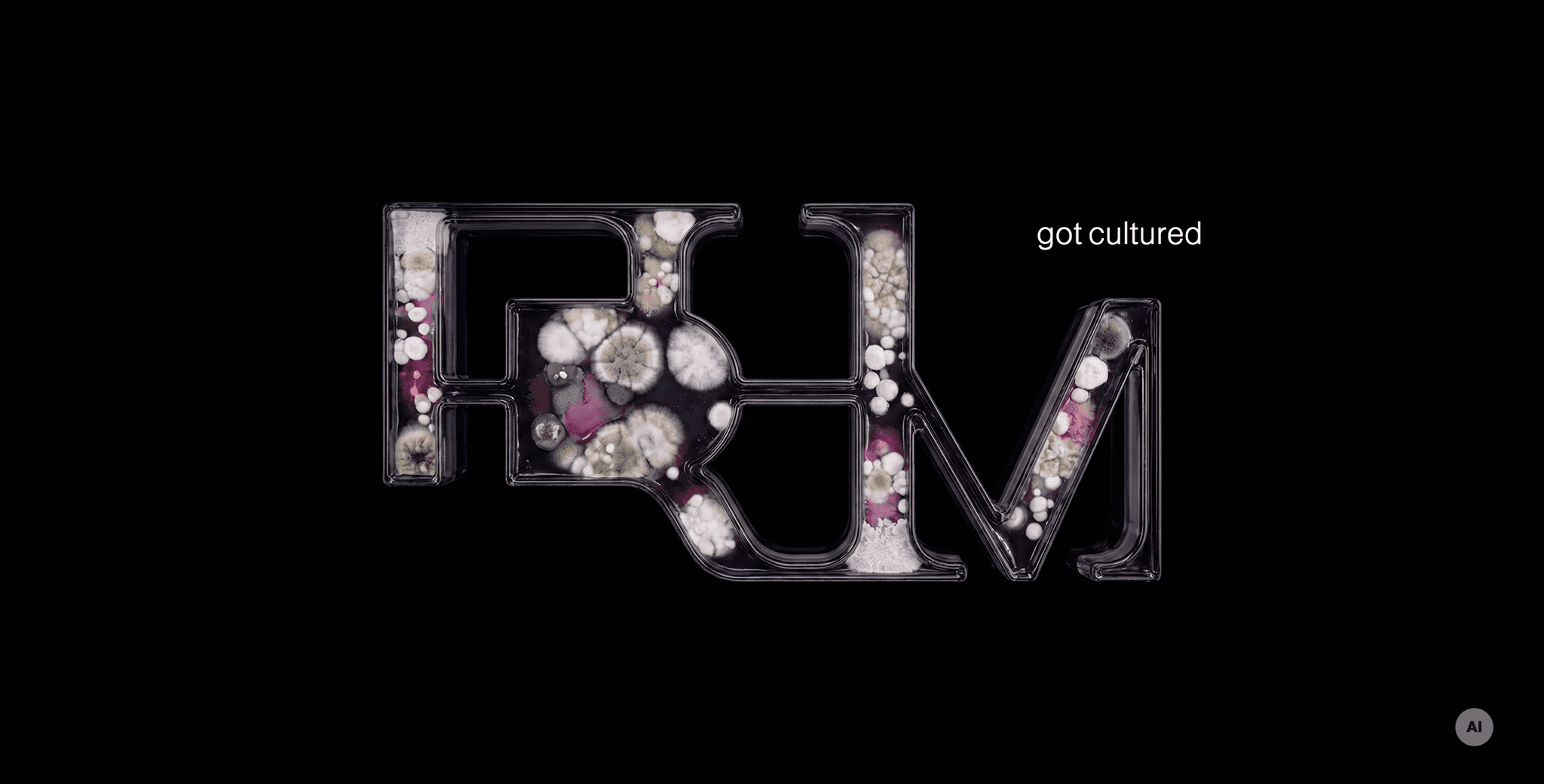
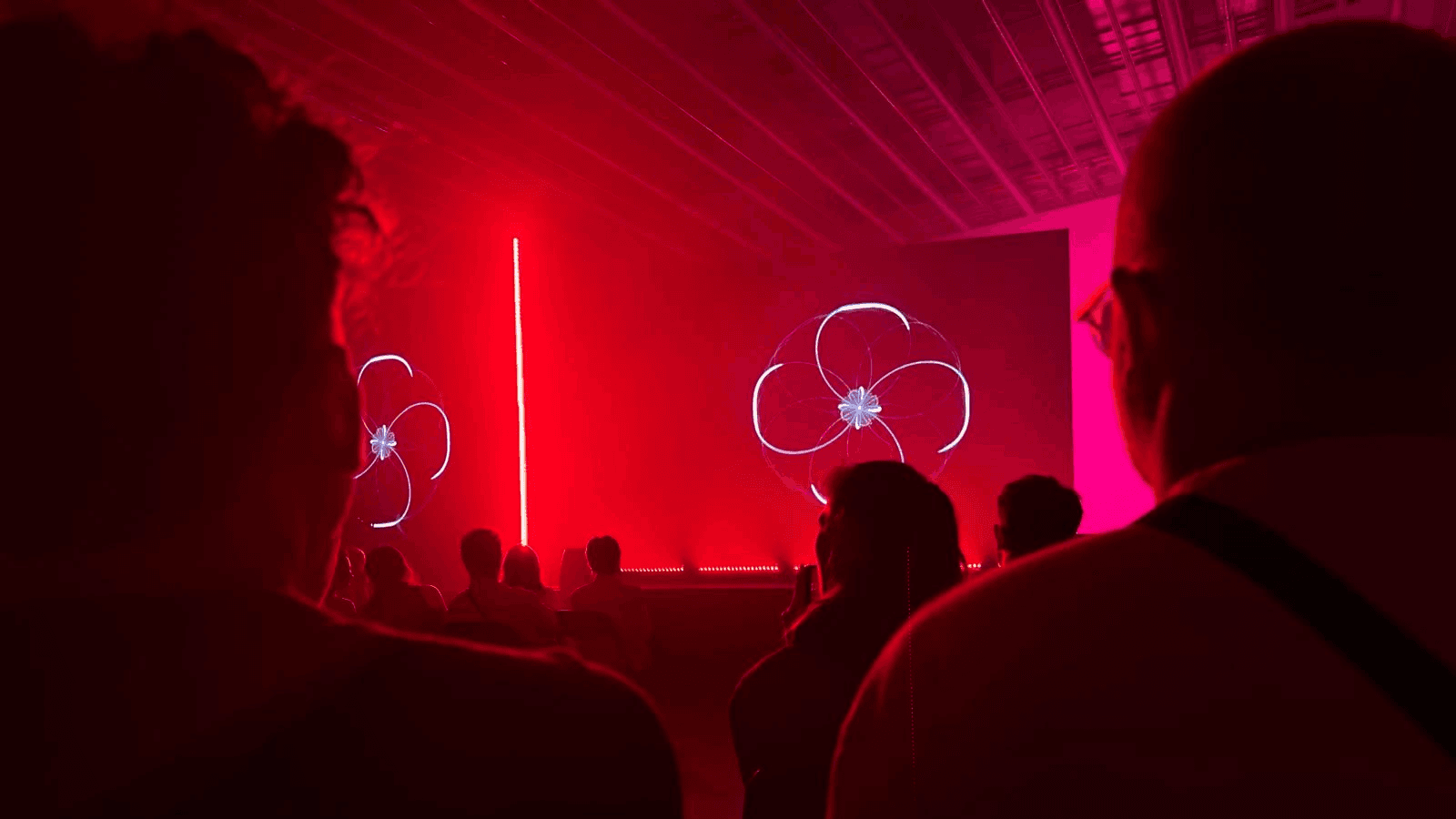
Nils Leonard from Uncommon studios set the tone on day one. While barely showing any work, he instead gave a sustained case for what creative thinking actually is and where it comes from, uncomfortable in the best way, because it asked you to interrogate whether your own ideas are genuinely yours or assembled from borrowed references without enough friction applied. The visual above is an homage to OFFF's main title concept 'Get Cultured', created by Uncommon.
Stockholm Design Lab's Björn Kusoffsky reinforced it from a different angle. Decades of practice distilled into a single pursuit: simple, remarkable ideas. Not minimalism as aesthetic. The discipline of stripping everything back until you hit the actual truth of what a brand is trying to do.
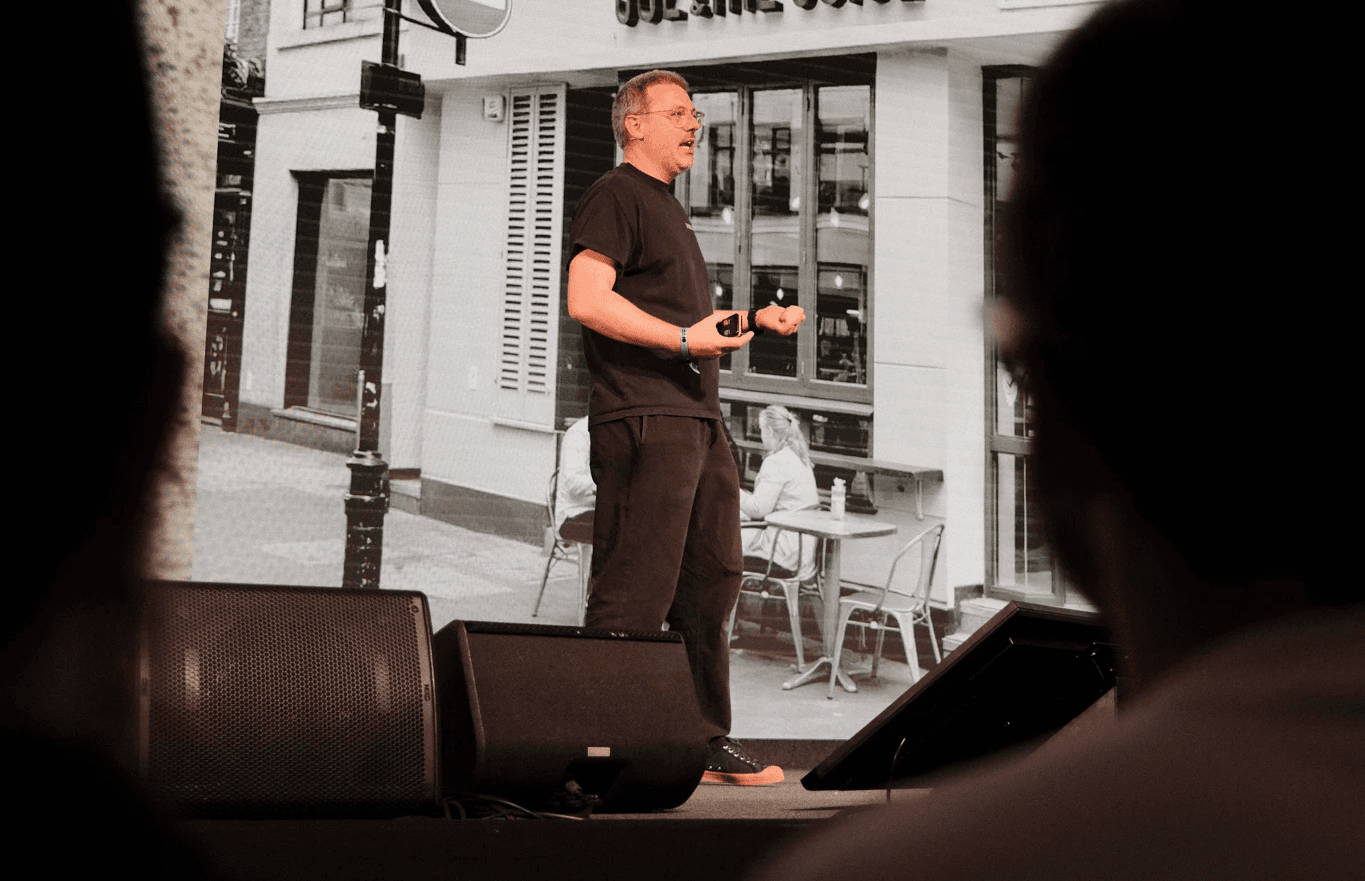
James Callahan, FutureDeluxe, OFFF 2026 - Barcelona
James Callahan from FutureDeluxe did something genuinely rare: he talked about almost not surviving. A real account of how close the studio came to collapse, what decisions made it worse, what eventually opened a path forward. For a studio whose visual output is as polished as anyone in the industry, the decision to put almost none of it on screen and talk honestly about operating a creative company was a bold choice. And it paid off.
The argument underneath was the same one Nils and Björn were making: if your value is in production speed and output volume, the ground under you is moving. If your value is in the quality and originality of your thinking, that's harder to commoditize.
This is a direct response to AI compressing the production layer. Craft still matters. But craft in service of a weak idea is more visible than it used to be, because the execution barrier is lower for everyone. Creative direction, the actual decision-making about what something should be and why, is the part that doesn't compress.
SMALL IS STRUCTURAL, NOT SCRAPPY
The overhead that made large studios credible five years ago, the headcount, the infrastructure, the account management layers, is now weight more than muscle. Smaller teams can deliver comparable output with a fraction of the operating cost, and clients are working that out.
Staying small is not a constraint FRHM is managing around. It's a structural advantage worth protecting. Senior people are doing the work, not overseeing it. The field is not moving toward consolidation right now, it's moving toward distributed capability, where a small, focused team with a clear point of view can go up against a larger operation.
But that advantage is only real if you use it. Lower operating costs buy you time, not direction.
WHAT ELSE THE FESTIVAL CONFIRMED
The hours between talks are where a lot of the real stuff happens at OFFF. Conversations with other studio founders sitting with the same structural questions, people working in adjacent areas who see the same shifts from a different angle.
Echolab representing sound design felt necessary and maybe even overdue. Sound carries at least half the weight of any motion piece, and the number of studios that treat it as a budget line to trim first remains too high. We commission sound early, watching what happens when you bring audio in late versus building both together from the start made that decision permanent.
Hamill Industries closed the festival with a live performance: real-time visuals, live music, analogue elements, digital and physical running together in the same moment. The kind of thing you can't stream and feel the same way about.
WHAT WE'RE TAKING BACK
Three things we're doing differently based on what this edition confirmed: putting more of our visible thinking into the concept and creative direction stage rather than waiting for finished output to share. Operating at small scale on purpose, and being more explicit about why that's an advantage for the work. And showing more process, including the parts that didn't work the first time.
The festival has been running 25 years. What it reflected back this edition was an industry reconsidering what the work actually is, not just adjusting to new tools. The studios navigating that clearly are the interesting ones to watch.
We intend to be among them.