PERSPECTIVE
FINISHED IS NOT THE SAME AS RIGHT
Joachim Wasteels, FRHM
•
We make CGI and motion for a living, and we run generative AI almost every day. That combination still makes some people in our field flinch, as if using the tools means surrendering to them. I see it the other way around. I would rather form an opinion about where this is going from inside the work than from the sidelines.
So here is mine, and it lands somewhere between the two camps shouting at each other online. AI is not going to kill 3D and motion. But it is going to change what the job is, who gets paid for it, and where the value sits. The studios and artists who read that shift early end up on the right side of it.
It helps to separate two questions that usually get tangled into one. One is about making art. The other is about making a living. They have different answers, and most takes settle one while pretending they have answered the other. This is mostly about making a living, because that is the part keeping people up at night.
WHAT THE TOOLS ARE ACTUALLY GOOD AT
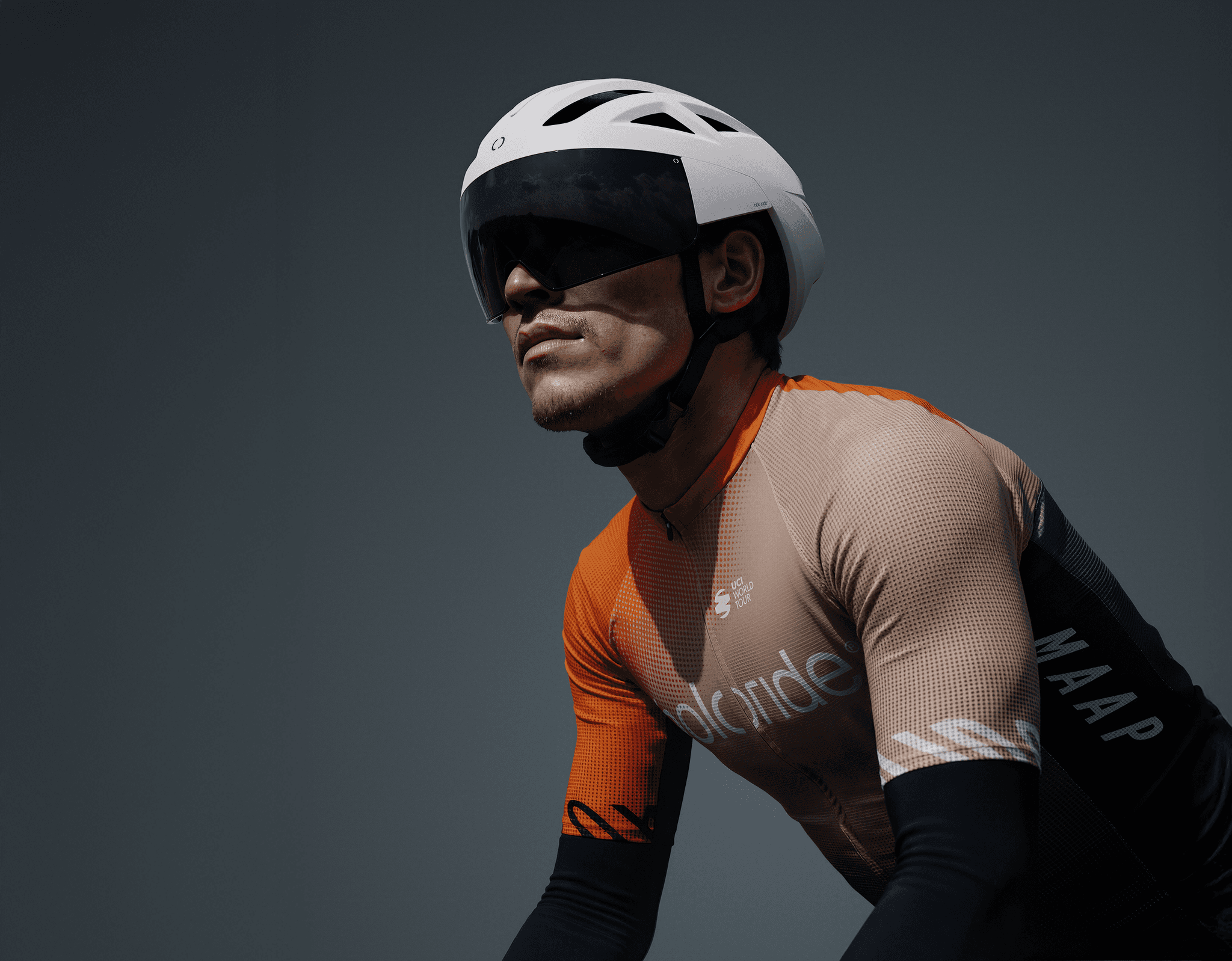
Let me be specific, because vague AI talk helps no one. Generative tools have genuinely transformed different parts of our pipeline. A text-to-image model gives us 40 different directions before lunch, where that used to be a week of work. Image and video generators let us explore a look, test a rhythm, and pressure-check a concept while it is still cheap to be wrong. On Holoride we burned through looks with AI-assisted moodboarding before committing to expensive 3D. On Volvo, AI-enhanced steps sat inside a fully built CGI pipeline, taking over the parts that were never where the value lived.
The win is not that AI makes the final frame. The win is that it collapses the distance between an idea and seeing it, so you can have ten bad ideas in the time it used to take to have one, and find the good one faster. Used that way, the tool does not threaten craft. It feeds it.
AI is strongest at the front of the work, where exploration is cheap and being wrong is free.
BUT IT CHANGES THE ECONOMICS
Here is the part the optimists skip. The same speed that helps us, also lowers the floor for everyone else. The bar for something that simply looks finished has dropped to anyone with a prompt box. Plenty of commercial work has always been built to exactly that bar, and reasonably so: fit for purpose, on brief, no more than the job asked for. That layer of work is getting cheaper, faster and more automated.
I am not going to dress that up. When production gets easier, it gets cheaper. And work whose only value was looking produced gets cheaper with it. Studios whose entire offer was making clean, competent, on-brand images quickly are under real pressure. Not because execution stopped mattering, but because clean and competent is now the floor rather than the offer. Clear-eyed beats comfortable here.
WHEN POLISH IS FREE, IT STOPS MEANING ANYTHING
And this is exactly where it gets interesting, because the same force that commoditizes the easy work makes the good work more valuable, not less.
For decades, looking expensive was a signal. If something looked slick and produced, you assumed a brand had spent real time and money on it, which meant the brand believed in its product enough to put skin in the game. Polish was proof of investment, and proof of investment built trust. AI just made polish free. Something can look professional and finished now without anyone having invested a thing, which means polish on its own has stopped signaling anything at all.
So the signal flips. When anyone can generate competent, on-brand images for next to nothing, the thing worth paying for is the part that is unmistakably considered: a point of view, a taste, an intention a prompt cannot fake. Choosing to make something with real craft becomes the new costly signal, the visible proof that a brand cared enough to do it properly.
THE BRIEF IS CHANGING TOO
It is not only the tools applying pressure. The ask is changing with them.
Clients are not asking only for images anymore. They are asking for production setups: something that applies their brand consistently, quickly, across more channels than any team could cover by hand. That is a fair request. It is also a different job than the one most of us trained for, and it is the reason so much of this conversation feels like the ground moving.
Read it as a threat and it is a threat. Read it closely and it is the opening, because someone still has to decide what those setups are allowed to do.
AI-generated base, every detail reworked by hand. The helmet is then fully replaced, because geometry is not something you can prompt your way to.
THE PART THAT STAYS HUMAN
So no, I do not lie awake worried that AI is coming for the work. But I do think it is sorting it.
The work is not only the output anymore. It is the system behind the output: the rules it follows, the behaviour it is allowed to have. That pushes the real decisions upstream. What is free to vary, what is locked, and where a human has to stay in the loop. A campaign's framing, pacing and crop can flex. A logo cannot. Geometry true to the real engineering cannot. Somebody has to draw those lines before anything gets generated, and to draw them well you need to understand both the brand and the machine.
That is also why the last mile stays ours. The things production lives or dies on, consistency across shots, a logo that is correct, a revision that lands precisely and not in spirit, are exactly the things a prompt cannot guarantee. Someone has to be able to say with certainty that this frame is right, and to fix it on purpose when it is not.
We manage to direct these tools well precisely because we spent years building the work by hand. Put the same model in two different sets of hands and you get two different results, because someone has to know what to ask it for and recognise when it has not arrived yet. We know why a reflection reads as cheap, why a material looks plastic, why a motion curve feels wrong even when nothing is technically broken. That judgment did not come from prompting. It came from the craft.
SO WHERE I LAND
This was the question about making a living, and my answer is steady. The easy work commoditizes, the considered work appreciates, and the job moves from making the image to deciding what the image should be, setting the rules for how it gets made, and making sure it is right.
That is also a change of position, not only of tasks. Taking a brief and executing it is not the problem, and we do plenty of it, gladly. What is under pressure is execution that stops at quick and correct, because quick and correct is exactly what the machine is getting good at. The work gets better where the brief itself can be questioned, where what needs to be made is still part of the conversation rather than settled before anyone starts. Same craft, different seats in the room.
Which is why my honest advice, to myself as much as anyone, is to invest in vision over speed. Grow taste, grow a perspective, learn the intangible things no model can hand you. Go wide on culture and philosophy, or go deep on R&D and distinction. Both work. Neither survives without taste. The technical craft matters enormously, but only ever in service of a point of view. Software can be learned by a machine in an afternoon. A point of view cannot.
It is exactly how we work at FRHM. We use the tools hard for the fast, exploratory front of the work, we keep human judgment and human hands on everything that decides whether the result is any good, and we put the time we save back into the ambition of the work.
The other question, the one about making art, is a different conversation, and a more hopeful one. Because whatever the tools do to the business, they cannot touch the reason any of us picked up the craft in the first place.
Curious how we put generative AI to work without losing the part that matters?
Let’s talk about your next project.